Resaro and Partnership on AI Host Closed-Door Roundtable on AI Quality Assurance at ATxSummit Singapore

GB1 0628

New report published on operationalising AI assurance; sector leaders convene to work through practical testing challenges

Singapore, 19 May 2026 — AI assurance is no longer a theoretical aspiration or a blind spot. Across sectors from financial services to public administration to the legal system, organisations are now applying structured, evidence-based methods to verify that AI systems perform as required. Comprehensive AI quality assessment is now a necessary complement to trustworthiness and mitigating AI risks.

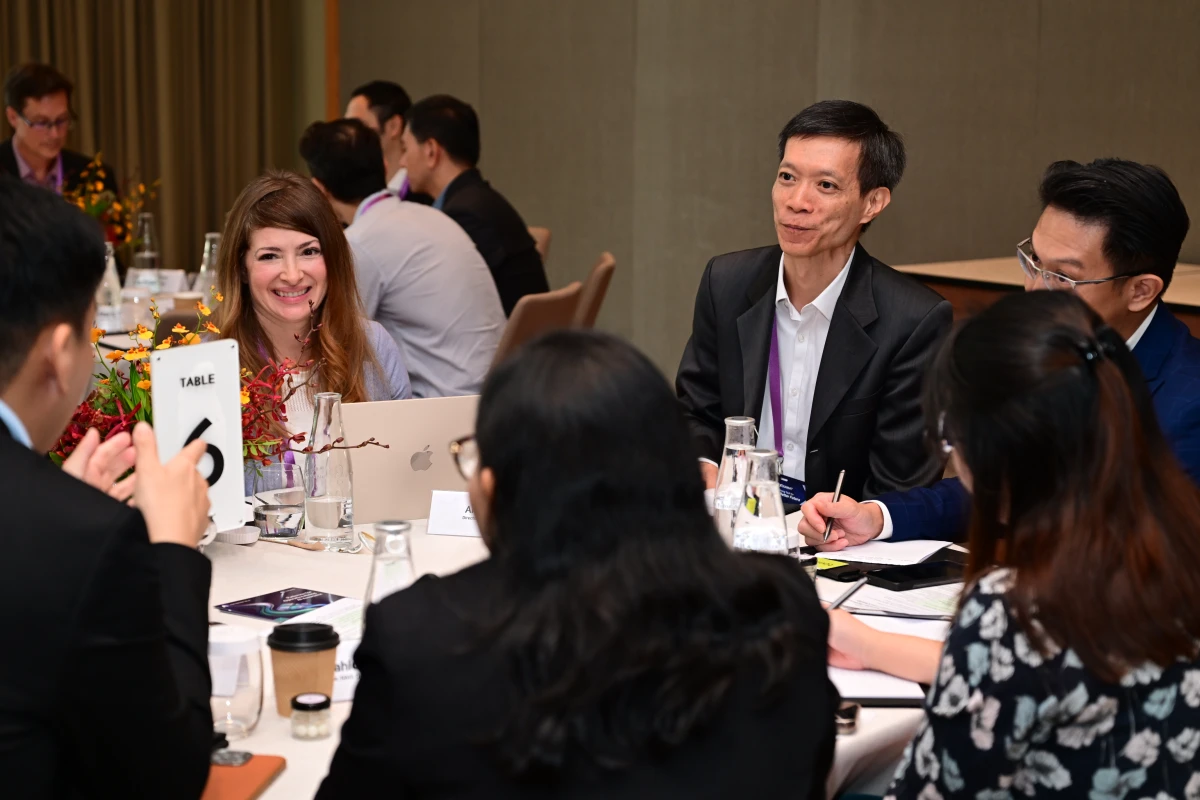
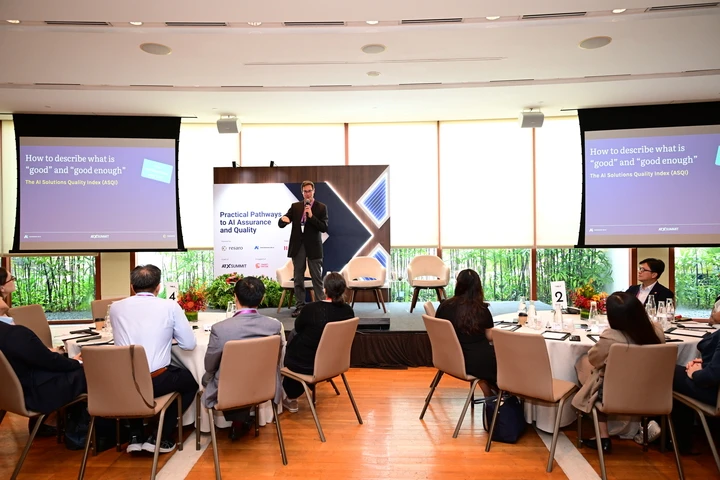
To advance further, Resaro and Partnership on AI (PAI) today hosted a closed-door working session at ATxSingapore, bringing together enterprise AI adopters, public sector leaders, and assurance practitioners. The session, Practical Pathways to AI Assurance and Quality, focused on the key questions at the centre of AI assurance: how to define, measure, and verify that an AI system is actually fit for deployment, and how to decide which AI solution is best suited in a given context.

About the roundtable: Approaching AI assurance in practice

At the roundtable, approximately 45 senior practitioners joined a working session structured around unsolved industry challenges. Participants developed quality indicator sets for real use cases and engaged with an overview of end-to-end testing, evaluation, verification, and validation (TEVV) practice.

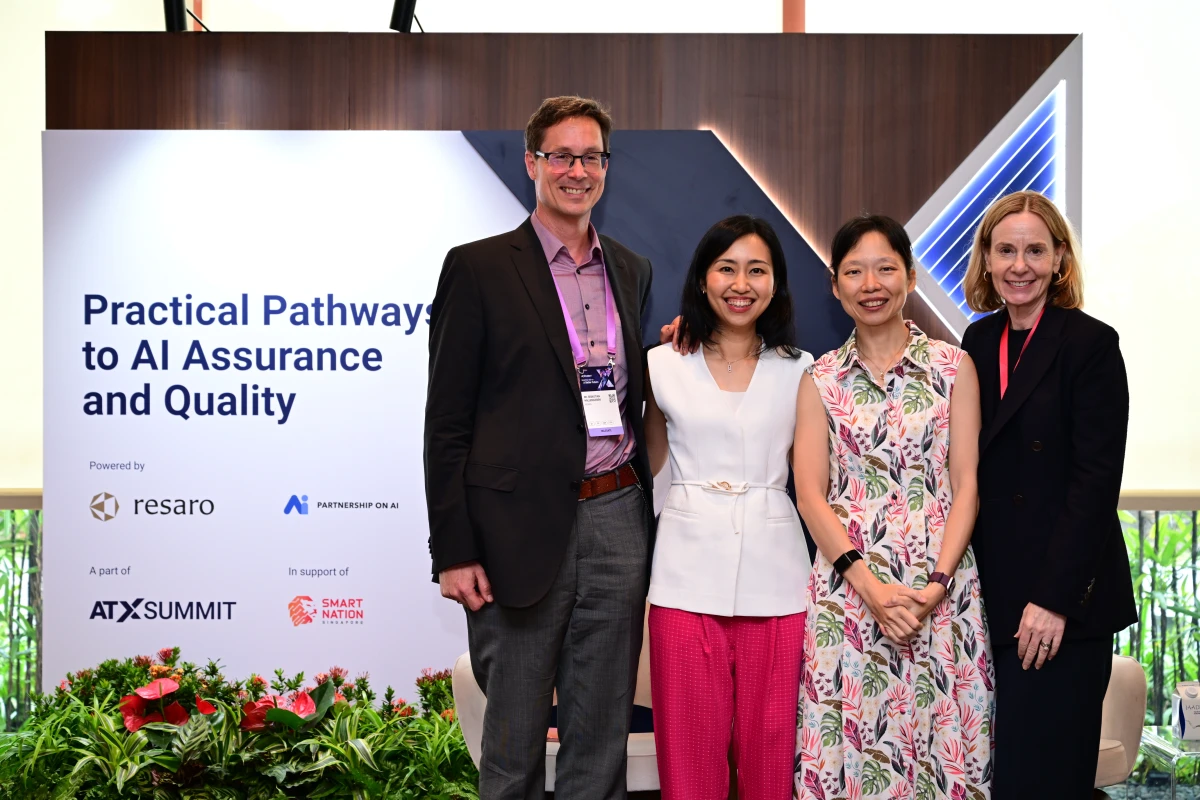
A centrepiece of the session was a fireside conversation with Minister of State for Digital Development and Information, Ms Jasmin Lau, joined by PAI CEO Rebecca Finlay and Resaro Co-CEO April Chin. MOS Lau encouraged the cross-pollination of ideas among early AI adopters, emphasising the importance of knowledge-sharing beyond sector boundaries, where diverse perspectives can help reframe familiar problems.

gb1 0582 720

The event was held on 19 May 2026, 2:00–4:30 PM, at The Gallery, Capella Singapore, Sentosa Island, as part of ATxSummit and in support of Singapore's Smart Nation initiative.

Report launch: “Pathways for Operationalising AI Assurance”

The event marked the publication of the fourth report on strengthening the AI assurance ecosystem from Resaro and PAI. Titled Pathways for Operationalising AI Assurance, the report responds to a common challenge: Organisations deploying AI today typically base procurement decisions on vendor-supplied benchmark scores and product demonstrations. These signals do not reliably predict how a system will perform under real operational conditions. The report argues this is a structural feature of the current AI market, not a failure of individual due diligence: no independent, standardised quality framework has existed for AI, equivalent to the metrics in more mature sectors (e.g. crash-test ratings, engine power, fuel consumption, boot space etc. when deciding which car to procure).

The report identifies six specific reasons why closing this gap has proven difficult: the absence of a shared language for quality across technical, operational, and governance stakeholders; the challenge of translating abstract principles into measurable criteria; the systematic divergence between benchmark performance and deployment performance; the cost and limited scalability of bespoke evaluation; the context-dependence of what counts as "good enough"; and a persistent tendency to treat trustworthiness and performance as competing rather than complementary properties.

A practical framework for AI quality assessment

The report presents the AI Solutions Quality Index (ASQI) methodology as a practical approach to these problems. ASQI structures AI quality assessment around a set of orthogonal, use-case-specific quality indicators, scored on a five-level scale rather than a pass/fail binary. The framework is designed to be automatable and repeatable, to produce results meaningful to non-technical decision-makers, and to support ongoing assessment rather than one-time certification.

Case studies in the report cover deployments in public administration, public safety, and legal services (also in connection with Singapore's IMDA Global AI Assurance Pilot). Across all cases, the framework produced structured, evidence-based assessments that vendor benchmarks could not: a clear basis for deployment decisions, and specific direction on where systems needed improvement before they were ready for use.

gb1 0296 720
GB1 0373